Tuesday, January 30, 2007

Movie Review: "An Inconvenient Truth"


An Inconvenient Truth is a bit of an odd movie to review. It's barely even a movie, even by documentary standards. 90% of the movie is Al Gore on a stage doing a presentation to an audience. The other 10% is miscellaneous scenes of Gore looking pensive in cars, on planes, on farms, etc. Surprisingly, the presentation was excellent, while the non-presentation scenes hurt the movie. I give it 3 and a half stars overall.

As everyone knows, the movie is about global warming. Since I already believe that global warming is "real", I wasn't sure that the movie would be all that interesting to me, since it is preachin' to the choir, as it were. But there's something interesting and valuable in seeing all the scientific evidence laid out in one sitting, and Gore has done an excellent job in creating an engaging way of telling the story. So engaging, in fact, that I started getting annoyed when they cut away from the presentation to do the little side pieces. It's not that the side pieces were poorly done (other than being a little melodramatic), they just weren't as compelling as the presentation itself and, in my opinion, they were also unnecessary.

I would definitiely recommend "An Inconvenient Truth", though I wouldn't call it a great movie.

Sunday, January 28, 2007

My take on the healthiest B10 basketball programs

"Health" takes into account a lot of factors, but the way I am defining it it basically boils down to "probability of success for the program over the next decade". Here's my opinion:

1. Ohio State - The Buckeyes have a lot of things going for them right now. They have a well-respected coach who is unlikely to leave over the next decade. They have a wonderful freshmen class and another solid class coming in next season. They have state-of-the-art facilities. They have "buzz". They appear to have a really good chance of making Final Fours in the near future, which should mean even more success afterwards. On the negative side is an apathetic fanbase combined with ridiculously high expectations.

2. Michigan State - The main reason I don't have MSU above OSU on this list is that I would be a little surprised if Tom Izzo is still the coach for MSU 10 years from now. He's young enough to do it, but I get the impression that he's looking around for new challenges. I also feel that MSU has struggled just a bit over the last few seasons, and it's been awhile since they headed into the NCAA tournament as a legitimate FF threat. But Izzo is one of the best coaches in the B10, MSU has been solid for a long time now, they have great facilities, and a enviable recruiting base.

3. Wisconsin - I struggled to decide whether to put Indiana or Wisconsin here. I finally settled on Wisconsin because Bo Ryan is, I think, one of the top 5 active coaches in college basketball and is apparently committed to UW for the long haul. They also have a new arena and they are finally starting to lose the Bennett stigma for playing boring basketball. On the downside, they have a veteren-led team this season so they'll need to replace a lot of players over the next couple seasons, and because it's Wisconsin, it would only take a couple mediocre seasons for them to slip back into obscurity.

4. Indiana - We're all familiar with the positives and negatives here. On the positive side is a quality coach who is expected to be at IU for the next decade, a rabid fanbase, lots of tradition which makes it easier for Indiana to get "back" into the national conversation, and fairly exciting short-term prospects for the next season or two. On the downside is lack of recent success, outdated facilities, out-of-whack expectations, and general program turmoil.

5. Illinois - I think there's a bigger gap between #4 and #5 than there is between #1 and #4. Illinois appears to have some significant issues, though they also have some strong positives. On the positive side is a lot of recent success and a recruiting base that most programs would walk over broken glass to have. They also have a solid coach who probably won't leave Illinois (by choice). On the downside is a surprising downturn in recruiting and out-of-whack fan expectations that I'm guessing will lead to a coaching change over the next 5 seasons -- which means rebuilding. They are the first program on this list that has any coaching issues (other than the vague possibility that Izzo might be getting bored). Also, they don't have the best facilities and like Indiana they are not blessed with a lucrative football program to generate income.

6. Purdue - It was a tough call putting Purdue ahead of Michigan, because Michigan is in some sense the "sleeping giant" of the B10. However, Purdue actually has a few key advantages over Michigan. First, obviously, is slightly more stability in the coaching position. While it's way too early to know whether Painter will be successful, he appears to be fairly solid and has already shown his prowess as a recruiter and they have a wonderful recruiting class coming in that should immediately help the program get back to at least "healthy" status. They also have a strong fanbase and a good recruiting base. On the downside, obviously, is they have by far the ugliest team colors in the B10, West Lafayette is enough to give people nightmares, a complete lack of recent success, sub-par facilities, and a head coach with all of 2 seasons of experience.

7. Michigan - It's embarrassing that Michigan is so low on this list, because they have so much going for them. They have a TON of money, they have a great recruiting base, they have great name recognition (in spite of recent problems), and Ann Arbor is a great college town. But all that is pretty much for naught, because of their coaching issues (either Amaker will get fired, which creates instability, or he'll keep his job, which is worse) and because of their apathetic fanbase. The best thing that can be said about the coaching situation is that the inevitable coaching opening will be fairly attractive, so they have a decent chance of landing a quality coach (history of poor choices notwithstanding).

8. Iowa - I believe Iowa is in a very difficult position. Fans are turning away from the team and attendence at home games is way down. Alford has been unable to produce quality teams at Iowa and has a long term contract, so he'll probably be there for awhile. When he eventually gets fired (I'm guessing it'll be 2-4 seasons from now), it's doubtful that Iowa will be a particularly hot coaching vacancy. The don't have great facilities or a noteworthy recruiting base, and they've historically had trouble being a top tier B10 team. It's hard to picture how they get from where they are now to a point where they are consistently a threat to win the B10.

9. Minnesota - Minnesota is obviously in trouble. They have an interim coach, an ancient arena, lack of recent success, frigid winters, a poor recruiting base, and an athletic director that does not fill one with confidence. On the bright side, um, is.... give me a second... I got it! On the bright side, they aren't Penn State.

10. Penn State - I think there's an excellent chance that DeChellis will be out of a job at the end of this season. Penn State actually headed into this season with a reasonable expectation of "taking the next step" and finishing in the upper-division of the B10 and making the NCAA tournament. Now they're 1-6 in the B10 and tied for last place. And unlike Michigan and Minnesota, Penn State is not an attractive coaching position, so there's no guarantee that changing coaches will lead to better results. Penn State is also the only B10 program where opposing fans are often louder on PSU's home court than the home fans are. That's very bad. The only positive for PSU is that they don't need basketball to generate any money for the school.

11. Northwestern - In some sense, there's no reason for NW to be last here. They have a solid coach who is a perfect fit for NW and will probably be there awhile, and that counts for a lot. But simply put - NW has never made it to the NCAA tournament, and there's no reason to believe that they are only a season or two away from doing it. Until they make it to the tournament for the FIRST TIME, I'm not going to move them out of last place on this list.

Friday, January 26, 2007

Movie Review: "The Black Dahlia"


I admit that the only reason I watched "The Black Dahlia" was because I didn't realize beforehand that it was directed by Brian De Palma. De Palma is one of my least favorite directors. He and Oliver Stone are the foremost examples of "over-directors", in my mind. Their movies generally drive me crazy because they seem to have this ego-driven need to spend the entire film showcasing their directing "talents", and thereby constantly inserting themselves into the movie... and taking the moviegoer out of the movie. Yeah, you're smart. You know all about camera angles and flashbacks and mood lighting. I get it. But I just want to watch the movie.

Interestingly, both Stone and De Palma have made movies that I've really enjoyed (like JFK and The Untouchables) , so I guess their style doesn't always prevent me from liking their movies... but those seem to be the exceptions to the rule.

Side note: The quintessential example of a director who doesn't "over-direct", in my opinion, is Steven Spielberg. He directed a string of unbelievably great movies and basically never got within sniffing distance of an Oscar... until he decided to film a movie in black & white (how daring!!) and bingo, he nabs Best Director for Schindler's List.

Anyway, back to The Black Dahlia. I give it 2 out of 5 stars. If I had to use one word to describe the movie, it would be "annoying". It lacked any sort of flow, and several times I thought the movie was about to end (thankfully), only to see yet another "twist" tacked on that I needed to watch. The only reason I gave it 2 stars (as opposed to fewer) was that the cast was very strong. I can stand to watch Scarlett Johansson and Hilary Swank even when they are in bad movies (and both have had their share). And I'm slowly coming around to Josh Hartnett, who I thought was wonderful in Lucky Number Slevin - though I admit it will take me awhile to forgive him for Hollywood Homicide.

So I suggest passing on The Black Dahlia. On the other hand, I hear the book is pretty good.

Thursday, January 25, 2007

Is simplicity a valid goal?

(this is something I posted on my work blog, and thought I'd post it here as well for giggles)

There's been an interesting discussion happening within the online user experience community recently on the virtues of simplicity (or lack thereof). Legendary Don Norman kicked off the debate in an essay titled "Simplicity Is Highly Overrated". Excerpt:

Why is this? Why do we deliberately build things that confuse the people who use them?

Answer: Because the people want the features. Because simplicity is a myth whose time has past, if it ever existed.

Make it simple and people won’t buy. Given a choice, they will take the item that does more. Features win over simplicity, even when people realize that it is accompanied by more complexity. You do it too, I bet. Haven’t you ever compared two products side by side, comparing the features of each, preferring the one that did more? Why shame on you, you are behaving, well, behaving like a normal person.

Basically, Norman's argument is that people say they want simplicity, but when it comes time to make a purchase decision, they go for features.

Joel Spolsky followed up on Norman's essay with some thoughts on his own experiences, specifically that people often confuse simplicity with aesthetics. Excerpt:

Devotees of simplicity will bring up 37signals and the Apple iPod as anecdotal proof that Simple Sells. I would argue that in both these cases, success is a result of a combination of things: building an audience, evangelism, clean and spare design, emotional appeal, aesthetics, fast response time, direct and instant user feedback, program models which correspond to the user model resulting in high usability, and putting the user in control, all of which are features of one sort, in the sense that they are benefits that customers like and pay for, but none of which can really be described as “simplicity.” For example, the iPod has the feature of being beautiful, which the Creative Zen Ultra Nomad Jukebox doesn't have, so I'll take an iPod, please. In the case of the iPod, the way beauty is provided happens to be through a clean and simple design, but it doesn't have to be. The Hummer is aesthetically appealing precisely because it's ugly and complicated.

Not surprisingly, not everyone thinks simplicity is overrated. On Scott Berkun's blog, he provides a defense of simplicity. Excerpt:

It’s easy to confuse success with quality, and both articles discount our secret inability to make satisfying choices. We are attracted to things with more features, that cost less, or come in larger quantities, despite our inner suspicions that we’re likely to complain about those purchases soon after. We date people, eat food, take jobs and buy products for superficial, misguided reasons all the time. We’re easily seduced, and every marketer knows we always have been and always will be.

But we shouldn’t confuse the success of feature-laden crap as a signal for the irrelevance of simplicity any more than the success of Rocky IV and Burger King signaled the irrelevance of good film-making or fine dining. It just means there are gaps between what we need, what we want, and why we buy, and that the masses are by definition less discriminating than the niches of people with refined tastes for a particular thing.
Berkun is basically arguing that there is still a place for simplicity, even if most folks don't give enough thought into their purchases to look for it. He also concludes by saying, "Simple design doesn’t mean brain death: it means being being as simple as necessary to achieve a great experience for a group of people, but no simpler."

When it comes to enterprise software, I think this discussion is even more relevant. Those of us in user experience often here the calls to deliver "simplicity", whether we're working on a small troubleshooting utility or highly available, performance-tuned, enterprise-capable application serving capability. "Make it simple!" we're told. This has long been one of my pet peeves, and the articles above touch on my beliefs, but don't quite capture them. Ironically, in his defense of simplicity, Berkun comes closest to capturing why I think "Make it simple!" is a mistaken goal. I think that saying "...as simple as necessary... but no simpler," is another way of saying "simplicity is NOT the goal."

Let me use an extreme example to make my point. Let's say we could create an application server product tomorrow that is so simple that all it requires is an on/off switch (I believe this can be done through the use of pixie dust). We release it and everyone raves about how simple it is. Until someone tries to use it and asks, "Uh, it was really easy to turn on, but I need a way to actually deploy my application." Well, okay, so we add a button for installing an application. That's not too bad, just one more little button. Still simple... and then someone says, "Great, I have my application running. Now I have an update to the application. What do I do?" Well, we could add another button for updating an existing application, but why bother? The product would be much simpler if we just have the user create a new server and install the new version of their application on it -- then we don't need to add another button!

Obviously, that would be a terrible decision. Why? Because creating a simple product is not the goal. The goal is to create a product that allows users to achieve their goals... and sometimes those goals are complex. Especially when it comes to enterprise software. If a customer has a goal of trying to maintain the value of their legacy systems by creating external services on top of the old systems that can communicate with newer systems, an on/off switch is not what they are looking for.

Obviously, unnecessary complexity is a problem, and IBM needs to do a better job of eliminating unnecessary complexity. But not because simple = good and complex = bad. We need to reduce unnecessary complexity because it interferes with a user's ability to achieve their goals. Simplicity, in and of itself, is not particularly relevant.

Side note: Of course, the challenge for the user experience engineer is that a feature that adds unnecessary complexity for one user is absolutely critical for another, so providing the features necessary to allow users to achieve their goals while also eliminating unnecessary complexity sometimes makes me feel like a circus contortionist. But that's a topic for another day.

Wednesday, January 24, 2007

Indiana at Illinois

1. I was one of those "glass half empty" guys who really expected us to lose this game, and so I wasn't at all surprised by the outcome. This game just had "loss" written all over it. At some point Indiana's hot shooting was going to cool off (YIKES), B10 road games are always tough, you know Illinois really wanted this game, no team (Sampson-coached teams included) can play a whole season without some off-nights, AND this team is not the kind of team that can have off-nights and still expect to win. My response to this loss is basically a shrug.

2. I think Bruce Weber is a good coach. He's not a great recruiter, obviously, but he's a good coach. However, now that Mike Davis is gone, I think he clearly now holds the league title for "more annoying sideline demeanor". He's just embarrassing out there. It's almost uncomfortable watching him... it's like watching Star Search when some awful singer is belting out a tune, and they are obviously the only one that doesn't realize how bad they are. In the grand scheme of things, this isn't important, but someone needs to sit Weber down and show him some game tape and have a frank conversation with him about representing Illinois.

3. Part of the reason it is difficult to win on the road in the B10 is that home teams get the calls. Indiana gets the calls in Bloomington. Our opponents get the calls when we're on the road. It's something that the team simply has to deal with if they want to win on the road. It's part of being a mentally tough team. In particular, I think DJ needs to get better at shrugging off the bad calls. I think after he got called for a foul on that block in the first half, the officiating got in his head a little bit. It's just college basketball. Complaining about officiating on the road is like complaining about the sun rising in the east.

4. That said, I would very much like to see the home team vs road team discrepancy when Illinois plays in Bloomington match the 20 to 9 personal foul and 20 to 6 free throw discrepancy that we saw last night.

5. We continue to struggle to find 3 "bigs" that we can count on. We have one big we can count on. We need three. I think Stemler has to be one of those 3. C'mon Lance, we need you.

6. Does anyone know when Ratliff is expected to get his cast off?

7. Indiana scored 18 points in 7 1/2 minutes. Then we scored 19 points in the next 32 minutes. Wow. We shot 8-32 FGs (25%) during that stretch.

8. I'm very happy that our next two games are at home.

Tuesday, January 16, 2007

WONK!

Big Ten Wonk has now posted tempo-free stats for B10 conference games only. Here's the links:

offense
defense
efficiency margin
pace

Wonk makes the point that even though the stats are tempo-free, with so few games to consider they are basically meaningless. But I'm a firm believer that bad stats are better than no stats, so...

Some notable stats from an Indiana standpoint:


  • Indiana is FIRST in the B10 in points-per-possession and EIGHTH in opponent points-per-possession. In other words, so far we're winning B10 games because of offense, not defense.
  • However, our 3pt FG % defense is incredible (2nd in B10 at 23.4%). This is balanced by being 10th in the B10 in 2 pt FG% defense (52.9% -- dang!).
  • Likewise, our rebounding has been surprisingly mediocre - 8th in defensive rebounding percentage and 4th in offensive rebounding percentage.
  • After our initial struggles holding onto the ball, it's nice to see us at 2nd in the B10 with a 16.6 turnover %. Last season we were 9th in the B10 at 22%, and Ohio State was best in the B10 at 16.8%, to put 16.6% in context.
  • Indiana is FIRST in the B10 in efficiency margin (which is our points-per-possession minus opponent PPP) at +0.21. Last year we were 7th at -0.03 and OSU again led the B10 at +0.14.
  • Indiana is also FIRST in the B10 in "effective possessions".

Thursday, January 11, 2007

I noticed something interesting in Pomeroy's predictions (warning: geeky)

First for a slightly geeky intro to the topic:

If you have slightly weighted a coin so that it lands on heads 60% of the time and tails 40% of the time, and you have to predict how many heads you will get if you toss the coin 10 times, what will you say? Obviously, the best guess is 6. However, if I ask you to predict which side the coin will land on each toss, you'll predict heads every time. So even though heads is "favored" on each individual toss, the aggregate prediction should not be 10, it should be 6.

When it comes to basketball (and other sports), people mess up this principle all the time. They look at a schedule and think, "Hmmm... we'll be favored in 12 games and underdogs in 4 games, so I predict we'll finish 12-4." But if a team is a slight favorite in 12 games, it makes no sense to predict that they'll win all 12.

Ken Pomeroy's site has a great feature where he uses his stats to give a percentage chance of victory for each team in each game, and then also provides an overall prediction for how many games a team will win. And he does the overall prediction the smart way - not just adding up the individual predictions, but looking at the percentage chance of victory in aggregate.

I just looked at it and he predicts that Indiana will end up with a 13-3 B10 record (after the Purdue game is factored in). That seems like a pretty reasonable prediction, perhaps a little more optimistic than me, but reasonable.

But here's what interesting: I then looked at the remaining B10 games and our percentage chance of victory in our remaining games. According to Pomeroy, Indiana is favored to win ALL of our remaining B10 games. EVERY one of them. According to the predictions, our toughest remaining B10 games are at Illinois (64% chance of winning), at MSU (58% chance of winning), and home against Wisconsin (61% chance of winning).

Pretty cool.

Tuesday, January 09, 2007

testing

We are trying to use the Blogzeffer again and have been confused. I'd like to hit whoever designed it. I wish we were signed in automatically like before. Has this always been a Google site? Didn't take us old foggies into account. Anyway, enough complaining, let's see it this posts.

Saturday, December 30, 2006

Book Review: "Mac's Boys" by Jason Hiner

I can't recommend this book enough for Indiana fans, especially those like me with no memory of the 1953 championship. It was incredibly well-researched, with great information about the state of the game at the time (coming off the point-shaving scandals at CCNY, LIU, and Kentucky), the opposing teams and coaches, the individual players on the team, and the play-by-play action of each of the games. The play-by-play was especially exciting for me, because I went into the book without knowing which games we'd won and lost, so I didn't know the outcomes until the final whistle sounded. It is full of quotes by the players, coaches, and the press articles of the time. Buy it and read it - you won't be disappointed.

Here's a few anecdotes to whet your appetite:

- Indiana lost 3 games that season, and each of them were lost on the last-second shots.

- Branch McCracken told his players at the beginning of each season to avoid "drinking, smoking, and gambling." This worried the players, because they knew these were three of Bobby Leonard's favorite things.

- The Minnesota coach was Ozzie Cowles, who went to Minnesota from Michigan, where he led Michigan to their first ever NCAA tournament appearance. After returning from the NCAA tournament, here's what Cowles had to say: "We'd been gone for a week, but no one seemed to notice. A couple of days after we got back, Fritz Crisler [UM AD and head football coach] stuck his head in my office and asked me where I'd been. That was when I decided that Michigan was no place to coach basketball."

- Because of the draft for the Korean War, there was an exemption that allowed freshmen to play in 1951-52, which allowed Don Schlundt to play as a freshman. He was a sophomore in 52-53, and (answering my trivia question below) he broke the all-time B10 scoring record a bit more than halfway through his sophomore season. Remarkable.

- Though IU beat Kansas in the championship game, it was that Kansas team that really changed college basketball in the years that followed. Kansas had lost Clyde Lovelette the year before and weren't considered contenders. But they changed the way they played defense and adopted Iba's Oklahoma A&M pressure defense that Iba played in the final few minutes of the game when down by less than 6 points. This was a pressure defense that played passing lanes and guarded players without the ball (and new concept). That year's Kansas team decided to play that way for the entire game and almost road their defense to the title.

- Kentucky was banned from playing the entire 52-53 season because of recruiting violations and point-shaving. Kentucky chose not to penalize Rupp, though. At all.

Monday, December 18, 2006

Transferring?

No sooner did you mention the posiblity that Xavier Keeling would be a likely transfer, he suddenly appears out of nowhere. Initially, I thought he was quite awkward looking out on the floor, but last night against Southern Illinois he almost appeared nimble. Sampson must think he can play some "D" or he wouldn't be out there. He might just be a better option inside than Ben Allen. What do you think? SI reminded me of Keady's Purdue teams of the past...the second tier recruits who knew they had to play ferocious defense or had no chance of winning. Those teams always finished near the top of the B10. No one looks forward to playing that type of team...you can't dribble without some guy in your face and can't pass (or can't wait to pass). SI anticipates the opponent will eventually wither and cave, but IU surprised then with an even more tenacious defense...COOL. It's like having a wisdom tooth pulled watching such a contest, but you can't fault the result.
Cookie Maker.

Sunday, December 10, 2006

Wow, what a frustrating Kentucky game

This was probably the first game this season where I felt emotionally attached to the outcome. I wanted to beat Duke, sure, but I didn't think Indiana really had much of a chance and losing at Duke is not a big deal. Kentucky isn't that good this year, and this was a very winnable game. Plus, it's KENTUCKY. I really wanted Indiana to win.

And what did Indiana do? They played hard. They took care of the ball (11 turnovers is pretty good against UK's defense). They played great, inspired defense (I love seeing that kind of perimeter pressure). They rebounded like demons. DJ White finally looked like an All B10 player offensively. It was a picture perfect game.

Except they couldn't buy a freaking basket. Aaaaurgh!

Stemler, Basset, Ratliff, and Calloway were 0-14 from the 3 point line. But never mind the 3 point line, other than DJ we couldn't make a layup either.

I wanted to throw things.

But it felt good to care. And one thing is for sure - if we continue to play defense and rebound like that, we're going to win a lot of games.

Wednesday, November 29, 2006

Duke games are kinda meaningless

Just like last year's Duke game, I don't think there's a lot we can take away from last night's game in terms of getting a better read on where this team will eventually end up. This is especially true of last night's game because we also don't know how good Duke really is. They certainly didn't look like the 10th best team in the country, but this time of year it's tough to know.

The thing is, Duke plays such a weird style of basketball, particularly on defense, that it's dangerous to read much into it. How many teams will try to deny every perimeter pass where both players are 30 feet from the basket? Duke's defensive philosophy is simple and effective: you have to drive to the basket on us and make good decisions to beat us. That's harder said than done. That's why Wilmont played 10 minutes last night - he doesn't have a great handle and he doesn't make good decisions. The things Wilmont does well, like shooting 3s, are almost irrelevant against Duke. What makes Duke's defensive philosophy successful is the same thing that makes Temple and Syracuse's matchup zones effective -- it completely removes a team's ability to play their regular offense. It gets teams outside their comfort zone. Teams have to improvise offensively for basically the entire game. It works.

The other thing Duke was doing is fronting DJ White in the post - completely fronting him, not 3/4 fronting, for the most part. For 99% of the teams out there, this would be a stupid thing to do, IMO. But because Duke puts so much pressure on the perimeter, the IU guards were 30 feet from the basket so throwing over the top means a loooooooong throw, and Duke's helpside defense is very quick. Again, Duke was basically daring Indiana to drive to the basket. They effectively shut down all the other offensive options, wriggled their fingers with their thumbs on their noses and said "Betcha can't beat me to the basket!" To their credit, Basset and Suhr did a pretty good job of meeting that challenge.

So how is the offense coming along? We have no idea. What does this game say about Wilmont and Calloway's future playing time? We have no idea. What does this game say about DJ White's future NBA prospects? We have no idea.

A few more miscellaneous thoughts:

1. Indiana played terrific defense all night. Holding Duke to 21 second half points is pretty remarkable. Holding ANY team to 21 points in a half is pretty remarkable (unfortunately Duke did it to us in the first half).
2. The team seems to be starting to display some of Sampson's trademark toughness. It's fun to watch the hustle.
3. Is it just me, or is Mike White about 5'11"? I swear I saw Suhr towering over him in the huddle.
4. The officiating in the second half was much better than the first. That is setting a pretty low bar, though.
5. Mike White and Ben Allen are exactly the type of interior players that struggle against Duke's defense, IMO. Lance Stemler is the exactly the type of "interior" player that thrives against Duke's defense. We missed him.
6. Joey Shaw is a remarkable bundle of kinetic energy. I'm really looking forward to watching him develop over the next 4 years.
7. How many times last night did one of IU's inside guys dribble into a Duke double-team and lose the ball off a Duke player's stomach? I stopped counting at 87.
8. So far, this team looks nothing like the team I expected. I'm not even sure what I expected, but I know it wasn't big minutes and contributions from Basset, Suhr, and Shaw. It's kinda fun to have know idea what is going on. You'd think I'd be used to that by now.

Tuesday, November 07, 2006

Basketball recruiting budgets

I got my Rivals.com Recruiting Yearbook in the mail yesterday, and I found something in there that absolutely SHOCKED me. They have a little blurb on page 161 about basketball recruiting budgets at public universities (for 2004-05). This does not include anything but basketball (they have a separate table with football recruiting budgets). For the B10, they have information on 9 schools (sans Northwestern and Penn State). Here's the list:

1. Illinois ($230,904)
2. Purdue ($145,395)
3. Michigan State ($132,370)
4. Ohio State ($129,923)
5. Minnesota ($124,374)
6. Michigan ($122,389)
7. Iowa ($99,219)
8. Indiana ($79,645)
9. Wisconsin ($43,309)

So first off... holy crap, Illinois spends WAY more than anyone else. They spend nearly THREE TIMES as much as Indiana, and there's a big dropoff between them and #2. Wisconsin clearly flies coach.

So that was interesting, but not shocking. Here's the shocking part. Here's the same list for the SEC:

1. Auburn ($837,005)
2. Arkansas ($504,564)
3. Tennessee ($460,491)
4. Georgia ($444,861)
5. Florida ($378,256)
6. Alabama ($342,585)
7. South Carolina ($339,328)
8. Kentucky ($297,725)
9. Ole Miss ($286, 630)
10. LSU ($266,360)
11. Mississippi State ($257,797)

$837,005!?!?! What the...? Illinois stomps the rest of the Big Ten, but they come in last in the SEC, and aren't even close to most of the conference.

Let me repeat, Auburn spends $837,005 in ONE year on basketball recruiting and Wisconsin spends $43,309... and Wisconsin is a Top 10 team.

I'm racking my brain trying to come up with an explanation for the differences between conferences on this (and... duh... no, it's not cheating... that comes out of a completely different budget). So far, I haven't been able to think of anything. Anyone?

Saturday, November 04, 2006

To Hell with emotional detachment!

(This is a repost of something I just posted on Peegs forum -> HERE )

Like most of the other fools on Peegs', I'm a bit of a freak when it comes to Indiana basketball. Being an IU basketball fan is part of what makes me who I am. I live in Durham, North Carolina, and I have quite a few casual acquaintances who know me as "that Indiana guy." You don't need to spend a lot of time with me before Indiana basketball somehow comes up in the conversation. ("You barely managed to stuff the turkey into the turkey fryer, huh? You know, that reminds me of a story about A.J. Moye, an Indiana basketball player, and Carlos Boozer....")

I was in a daze for several days after Indiana lost to Duke in the Final Four in 1992. It wasn't just the Valentine-induced manner in which they lost, it was that I just couldn't believe the season was over. At the time, I thought it was all about the loss, but in retrospect I now believe that even if Indiana had won the title, I still would have felt a little empty for a few days afterwards... because I loved that team so much that I simply didn't want the season to end, for good or for bad. In some sense, 1993's loss to Kansas in the Regional Finals was even worse, because that was the end for Greg Graham (my all-time favorite Hoosier) and Calbert Cheaney (who is in my Top 5).

A cynic might say, "Well, duh! So you get excited when IU is ranked #1 and you really like IU's greatest players?! Whoa, stop the presses!" Cynics are annoying like that. But it's not true, my bleeding crimson did not end in spring in 1993. Or 1995. Or 1998. And other players on my list of favorite Hoosiers includes guys like Lyndon Jones and Micheal Lewis (good player, but certainly not all-time greats). The point is that there was a day when the team's performance would affect my mood for days afterwards. Actually, there were a lot of those days.

I'm not sure exactly when it happened, but I'm not like that anymore. It started before Knight got fired and it continued throughout the Davis era. Emotional detachment. I think it basically was a means of self-protection. And primarily, I think it was self-protection from 3 things - the team, the coach, and the forums.

First, much to my surprise, late in the Knight era I realized that I was starting to not enjoy how the team was playing (though ironically the 99-00 season was an exception to this rule). I thought our defensive effort was generally poor, and surprisingly I thought our teamwork was suffering as well. I thought we had good kids on the team, but that doesn't mean I liked watching them play basketball. It was hard to watch significant minutes from Larry Richardson, William Gladness, Richard Mandeville, Rob Turner, etc., and not lose a little attachment to the outcome of games. And even our marquee players like Luke Recker, Neil Reed, Charlie Miller, Jason Collier, and Andrae Patterson oftentimes made it difficult to let myself become emotionally invested in the team. When Davis took the job, I really enjoyed watching our defensive effort the first couple years, but the offense was inmmediately and consistently painful. And here was the worst part - even when the team was effective on offense, it didn't make it enjoyable. Jared Jeffries was a wonderful player, and feeding the ball into him and letting him make decisions with his back to the basket was a winning offensive strategy... and it was hopelessly boring. Again, we had good kids on the team, guys who (if she were 12 years older) I wouldn't mind dating my daughter -- like AJ Moye, Dane Fife, Kyle Hornsby, JJ, Marshall Strickland, and Tom Coverdale. Actually, maybe I wouldn't want Dane Fife dating my daughter (he's crazy), but you get the idea. The last 3 seasons, things got progressively worse, because even the defensive aggressiveness stopped being a motivation to watch. And it's not that the teams weren't very good. I've developed strong emotional attachments to mediocre teams - what generally matters is the perceived difference between how good the team is and how good I think the team ought to be - and style of play. Obviously, I get more attached to great teams (I'm human), but it's not the only factor.

Second, there's the coach. I'm going to basically leave this one alone, because I don't want that to become what this post is about, but in the interest of honesty... late in the Knight era and throughout the Davis years I grew increasingly tired of having a coach for whom I didn't have a lot of respect. I often defended both, but (for mostly completely different reasons), I had trouble coming to grips with the notion that either of them were supposed to be My Guy. That's all I have to say about that.

Then there's the forums. I love the forums. Look at my post totals. But there's a weird sort of dynamic for me on here. I get tired of reading critical posts about the team or the coaches... even when I agree with the criticisms. Actually, especially when I agree with them. If I disagree, I can leap to the team or coach's defense, and obviously defending MY team or MY coach is something I enjoy (though, in the case of the coach, I'd like to have less opportunities to leap to his defense). If agree with the criticisms, then it just seems to double how I'm feeling about the situation. On the bright side, the forum also increases my enjoyment of the good times. Basically, the forum accentuates my emotions in either direction, and when the direction is generally negative, the forum can become unpleasant for me. This is why each of the last 3 seasons I've spent at least part of each season away from the forums and I've stopped watching games. Because I simply got tired of being pissy all the time. I'm guessing I'm not alone in that regard.

But you know what? I've had enough of self-protection. I've had enough of guarding myself against my own fandom. I miss the days when I couldn't wait for the season to start and got depressed when the season ended. I want to live and die with every 3 pointer, every rebound, and every turnover. I want to rattle the house when we hit the game winner, and I want to commiserate with my forum buddies when the other team hits it. I want to passionately dislike our opponent again, and I want to believe that Indiana fights for the glory of the entire state again. I want to defend our team and our coach with reckless abandon, and not try to concede that maybe the other guy has a point. I want to be relentlessly positive, even when maybe the situation doesn't warrant it. In other words, I want to be a fan again, through and through.

People like to post long missives when they decide to leave the forum. This is the opposite. =)

Tuesday, October 31, 2006

Jay Bilas on Sampson's illegal phone calls

Jay Bilas (IMO the best college basketball analyst in the business) had this to say in a recent Insider article on ESPN previewing the Hoosiers:

The penalties that were levied on Sampson as a result of the phone calls are still being talked about, and my sense is that they will be talked about all season. Here is the final word from me on the phone call rule, and Sampson's violation of that rule:

I have seen much written about the situation, and precious little of it accurate, in my judgment. While I respect any informed opinion on the matter, it seems like too many are too quick to repeat what they have heard or what has been reported rather than to undertake some independent investigation of the matter. Here is what I know: Sampson has been reported to have made 577 impermissible phone calls. What is not reported is that the 577 calls were for Sampson's entire staff, and they were made over a 48-month period. That adds up to 12 phone calls per month, or three phone calls per week for the whole staff. Less than half of those calls (233 over a 48-month period) were made by Sampson himself. That adds up to five extra calls per month, or just over one per week.

Remember, Sampson and his staff recruited dozens of players. Some of these calls were when there was a lack of communication between staff members, some of them were when a cell phone call was dropped and the call was resumed, some of the calls were when the recruit called Sampson and Sampson called back, and some of the calls were from a lack of attention to detail. Instead of sending a text message telling a recruit to call him (which is permissible), Sampson just called the recruit. It was a violation of the rule, and that is not to be taken lightly, but it was not the sinister plot it is made out to be. This is not to excuse the violation of the rule, but to explain it.

My point is this: These phone calls were not part of some evil effort to cheat. Those who want to cheat the phone call rule will never be caught because they use a cell phone that is not in their name, or phone cards that are not traceable. If the NCAA looked into any program, it is likely that a violation of the phone call rule would be found, perhaps just in lesser numbers. This was a minor violation that has been overblown. The way the NCAA handled this matter had less to do with the violation of the rule than with how Sampson and Oklahoma responded to the matter. Instead of dropping to their knees and giving the NCAA a tearful mea culpa, Sampson defended himself. That is a no-no in NCAA territory, and the Association hit him hard for it. This is not the last time you will hear of this rule; others have violated it, and we will see whether those cases are handled in a similar fashion.

Interesting take from a guy whose opinion I respect -- and who certainly doesn't have a history of looking the other way when he thinks something unethical is going on.

Sunday, October 29, 2006

Camping with the kidlets

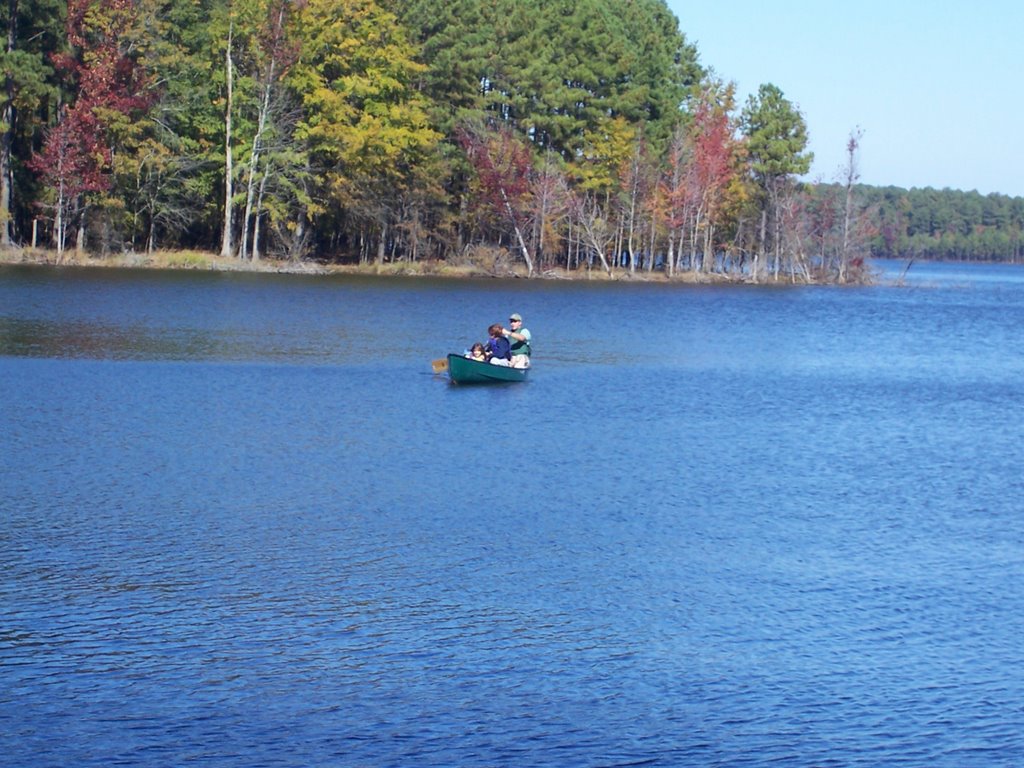
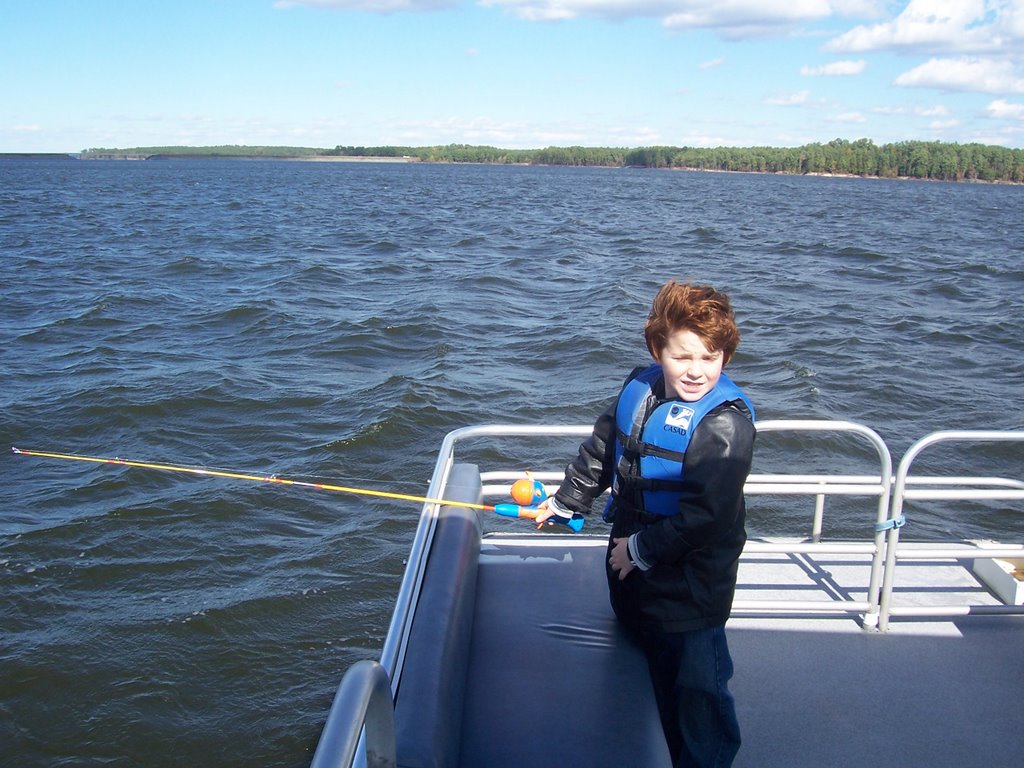
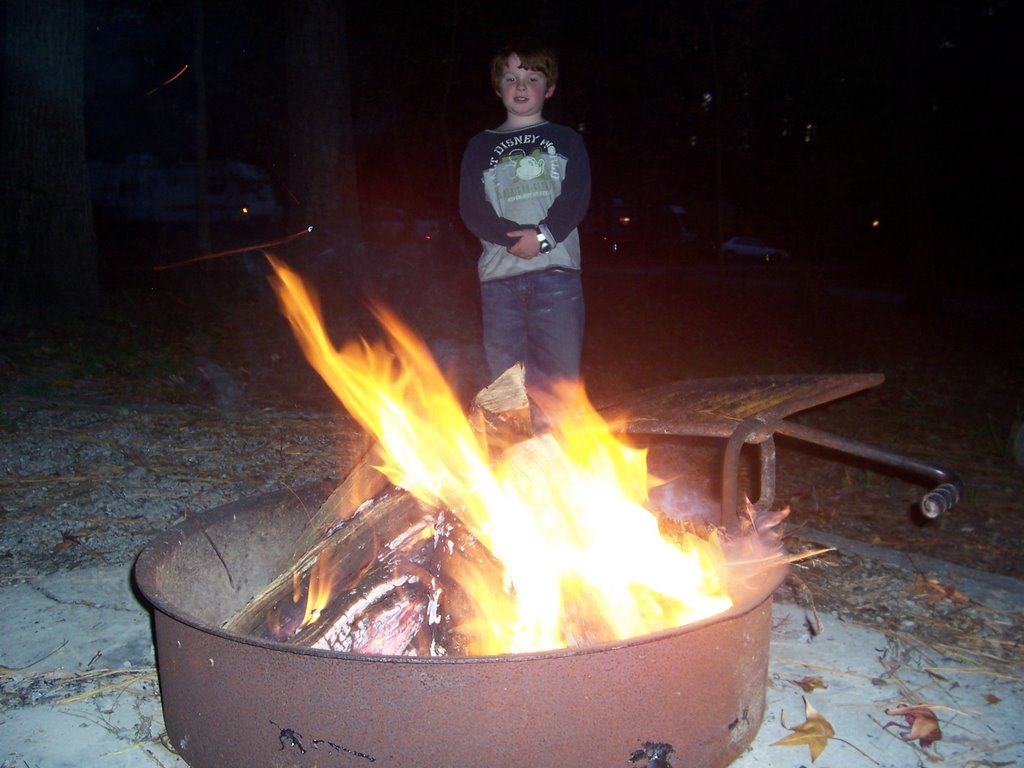
The kids and I went camping at Jordan Lake this weekend, and I snapped a few pictures. As always, just click on the picture to view the full-sized image.


Tuesday, October 17, 2006

Tyler's Knight


Everyone should have a life-sized knight in their room. It's like khaki... it goes with everything.

Friday, October 13, 2006

Eric Gordon will play for the Indiana Hoosiers!

I have nothing more to add.

Except maybe a Yeeeeee HAW!

Thursday, October 12, 2006

Wet Blanket: It's hard not to be jaded about pre-season articles

I'm enjoying the pre-season articles, as usual, but with each passing year I get more and more jaded about these. It's fun because everyone's optimistic and everyone talks about how this season is different/better than last season and how great all their teammates look and whatnot. But it's the same thing every season, and it's the same thing for every team. Have you ever read a preseason article where a player said, "It's a relief because our conditioning drills are so much easier than last year." Nope. But if conditioning is always harder than the season before, isn't there a ceiling effect at some point? And of course everyone raves about the new guys (like Stemler and White) and raves about the guys who need to improve (like Ratliff)... but c'mon, I remember the glowing Cem Dinc articles a year ago as well.

It's even hard for me to get excited about the players talking about how much more disciplined Sampson is than Davis. For example:
"I think that is what last year's team lacked, discipline," said Ratliff. "Last year anybody could say something to Coach Davis and he might kick them out but they would be back the next day. I don't think anybody is going to do that to Coach Sampson."


While that's certainly nice to hear, IMO it says a lot less about Sampson than it does about Davis. In other words, it's not Sampson's behavior that's notable in that quote, it's Davis's. While it's certainly a good feeling to know that we have a real coach again, not allowing players to backtalk doesn't exactly make Sampson a strict disciplinarian. It just makes him competent.

Of course even apart from these articles, we fans are the same way. We start to think, "Well, if AJ and Ben Allen play really well... and Mike White and Lance Stemler are big contributers... and Wilmont and Calloway have great senior seasons... and DJ White is an all-american... and everyone stays healthy... man, we could be really good!!" Well, sure, that's true. And while we're at it we could also wish for a pony.

Yeah, I know, I'm a wet blanket.

Thursday, September 28, 2006

Pictures from St. Kitts

So St. Kitt's was even better than we hoped it would be. The resort was beautiful, it had a wonderful italian restaurant, the weather was perfect, and we spent an entire week during very little and enjoying every minute of it.

Only one problem - we left our fancy-schmancy digital camera at home and had to make do with a couple disposable cameras we bought (for a magnificant sum) at the resort. Which means the pictures are a little fuzzy and some of them didn't turn out very well but we didn't know it until we got back. I love digital cameras.


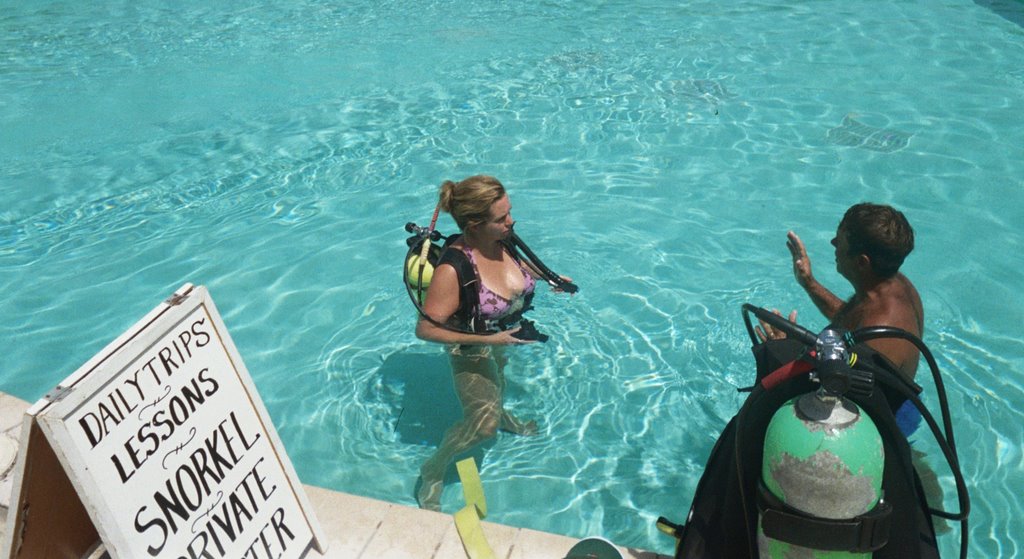
Here's a picture of Karen learning how to scuba dive in the resort pool. I ended up going scuba diving in the caribbean a couple days later. Karen got a massage instead.


Here's a picture I took from the ocean looking back at the resort. Then I dipped underwater...


... and took this picture.


Here's a poorly-lighted picture of Karen feeding a monkey at the Turtle Beach Bar & Grill. Karen gently touched one of the monkeys and it smacked her. She screamed. Everyone enjoyed it.


Here's Karen and I on top of one of the mountains near the resort. Behind us on the left is the Atlantic ocean and on the right is the Caribbean.


Here's the view from our resort suite. The hill across the bay on the right is the hill we're standing on in the previous picture.


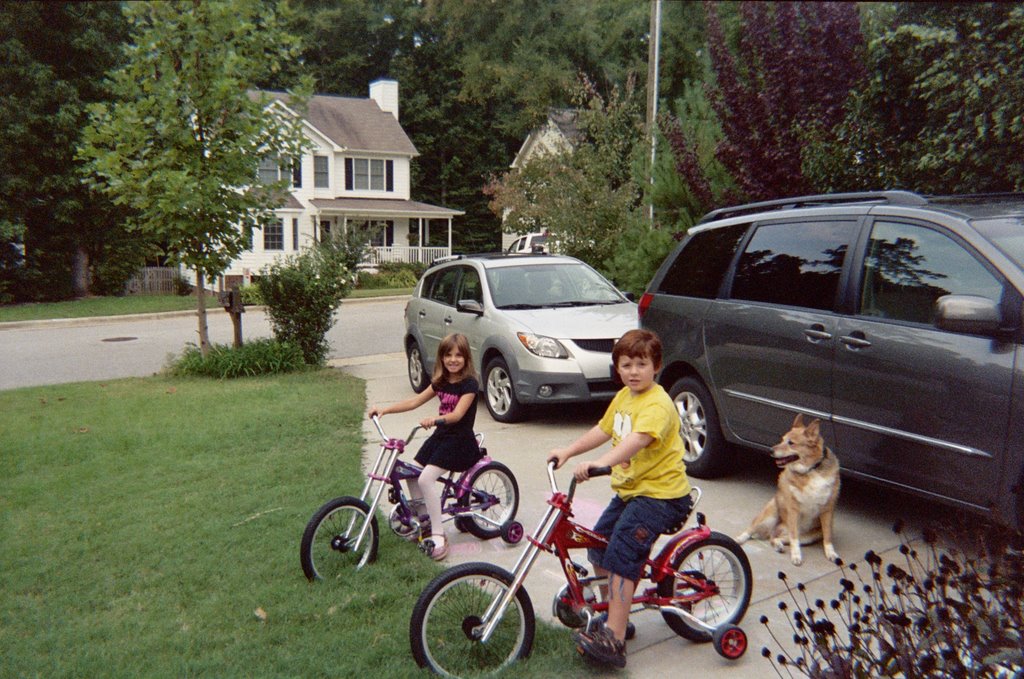
Here's a gratuitous picture of Tyler and Carson (and Sheila) in front of the house after we returned.


And this is me, bald.